Best Machine Embroidery Thread: Picks by Fiber, and What Your Manual Says
Three top-thread picks compared from maker pages, polyester vs rayon by how the item is washed, and the bobbin thread weight each Brother manual names.
 By EMS Team
Updated October 20, 2026
This guide contains no affiliate links. We are an independent site, and we do not conduct our own product trials. Our picks come from manufacturer pages and Brother’s operation manuals, and we say plainly where a maker does not publish a detail.
The best machine embroidery thread for a home machine is the one your manual points to for the top spool, plus the bobbin weight your model names, and then a fiber chosen for how the finished piece will be washed. Brother’s manuals recommend Brother embroidery thread on top and do not name a top thread weight, but they do name a bobbin thread weight, and it differs by model. This guide compares three top-thread choices using only what the makers publish, then gives a model-by-model bobbin table. We have not used any of these threads ourselves, so we cannot tell you how they run through a machine.
Quick answer
- Brother ETPBEST100 Best 100 Thread Kit: the match for the “use Brother thread” advice in Brother’s manuals. A sensible start for beginners with a Brother machine.
- Madeira Polyneon #40: polyester that Madeira says resists chlorine bleach. The pick for items that get washed hard.
- 40 weight rayon (Sulky and Madeira Classic Rayon): the choice when sheen matters and the item will be washed gently or rarely.
- Bobbin thread: 90 weight for the PE545, PE900, and Skitch PP1; 60 weight for the SE700 and SE2000, per each machine’s manual.
How we chose
We used three criteria, in this order:
- Brother’s manuals first. If you own a Brother machine, the manual’s thread guidance outranks any shopping list, including ours.
- Specifications the maker publishes. We used the thread maker’s own page for fiber, weight, spool length, and care claims. We did not use marketplace listings, star ratings, or seller copy for specifications. Where a maker does not state something, the table says “Not stated.”
- Fit to how the item is washed. Fiber matters most when a garment meets bleach or constant sun.
This is a supplies guide, so it does not use the EMS Rating, which is built for machines. Machine scores are explained on our How We Review page. If you are still choosing a machine, start with our embroidery machine roundup.
Thread compared
| Thread | Fiber | Weight | Spool length | Maker’s care claim | Best for | Source |
|---|---|---|---|---|---|---|
| Brother ETPBEST100 Best 100 Thread Kit | 100% polyester | Not stated | 1,100 yd per mini-king spool, 100 colors | “Color-fast.” Bleach resistance not stated | Brother machine owners who want one brand-matched set | Brother USA product page, checked October 21, 2026 |
| Madeira Polyneon #40 | 100% polyester | #40 | 1,100 yd | Resistant to chlorine bleach; OEKO-TEX certified | Workwear, towels, and other items washed often | Madeira USA product page, checked October 21, 2026 |
| Sulky 40 Wt. Rayon | Rayon | 40 wt | Not stated on the maker’s page | Not stated | Sheen on items that are washed gently | Sulky thread page, checked October 21, 2026 |
Madeira also makes Classic Rayon, which it describes as “the original embroidery thread, unmatched in color, luster and satiny soft.” We do not list its weight or spool size because we did not confirm them on the maker’s page.
Our three picks
1. Brother ETPBEST100 Best 100 Thread Kit: for Brother owners and first-time buyers
The PP1 manual states: “Brother embroidery thread is recommended. Other embroidery threads may not yield optimum results.” The PE900 and PE545 manuals say to use embroidery thread intended for use with the machine. A set sold by Brother is the least ambiguous way to follow that advice. Brother’s page lists 100 colors of 100% polyester, described as color-fast, on mini-king spools of 1,100 yd each.
Pros: brand match to what the manual recommends; a wide color range from one source, which suits a first few projects; polyester fiber.
Cons: Brother’s page does not give a thread weight or say anything about bleach, so you cannot compare it with other threads on those points. A 100-color set is also more thread than a beginner may need at first.
Who should skip it: anyone who needs a documented bleach-resistant thread, and anyone who only wants a handful of colors. Owners of non-Brother machines should read their own manual first.
If you are still deciding on a Brother, our beginner machine guide and the PE545 vs SE700 comparison cover the models these manuals describe.
2. Madeira Polyneon #40: for items that get washed hard
Madeira’s page describes Polyneon #40 as 100% polyester machine embroidery thread, #40 weight, on a 1,100 yd spool, resistant to chlorine bleach, and OEKO-TEX certified. It lists needle sizes #65/9 or #75/11. The wider Polyneon line has 387 solid, 20 multicolor, and 24 fluorescent colors, so the full range is larger than the single spool Madeira describes on this page.
This is the only thread in our set with a bleach claim from the maker. That matters for items such as aprons, uniforms, and towels, and for patches or appliqué that will be laundered often. See our guides to making patches and appliqué for those projects, and note that thread choice is only one part of how well they last.
Pros: a maker-stated bleach claim, a stated weight and needle range, and a large color line.
Cons: Brother’s manuals do not name Madeira thread, and Brother’s PP1 manual warns that other threads may not give optimum results. Color matching to a Brother set will not be one to one.
Who should skip it: owners who want to stay strictly with the thread brand their manual recommends, and anyone making display pieces that will never see bleach or heavy washing.
3. 40 weight rayon: for sheen on gently washed items
Sulky’s blog calls 40 weight rayon “by far the most popular thread for computerized stitching.” Sulky sells both fibers, so treat that as a seller’s view, but the claim is about popularity, not about quality. Sulky’s thread page names its 40 Wt. Rayon but does not give spool details, and we did not use a retailer’s numbers. Madeira describes its Classic Rayon in terms of luster and a soft, satiny look.
Pros: a sheen that many stitchers prefer for decorative work, and a widely used weight.
Cons: neither maker page we read states a bleach claim for rayon, and Sulky recommends polyester for items exposed to chlorine bleach or constant sun.
Who should skip it: anyone embroidering workwear, outdoor items, or anything that will be bleached.
Embroidery bobbin thread: the weight your manual names
The bobbin is where Brother’s manuals are most specific. The table below comes straight from each machine’s operation manual. Your model may differ, so check yours.
| Machine | Manual | Bobbin thread the manual names |
|---|---|---|
| Brother PE545 | 888-P30 | 90 weight embroidery bobbin thread |
| Brother PE900 | 888-K80 | The included 90 weight embroidery bobbin thread, or recommended 90 weight |
| Brother Skitch PP1 | 888-R00 | 90 weight embroidery bobbin thread |
| Brother SE700 | 888-P10 | Recommended 60 weight embroidery bobbin thread |
| Brother SE2000 | 888-K10 | Recommended 60 weight embroidery bobbin thread |
The split follows machine type: the embroidery-only machines name 90 weight, and the sew-and-embroider models name 60 weight. If bobbin thread shows on the top of your design, first confirm the bobbin weight matches what your manual names. Our Brother error codes guide covers what common warnings mean. Model-specific details are in our reviews of the PE900, SE700, and SE2000.
Polyester vs rayon
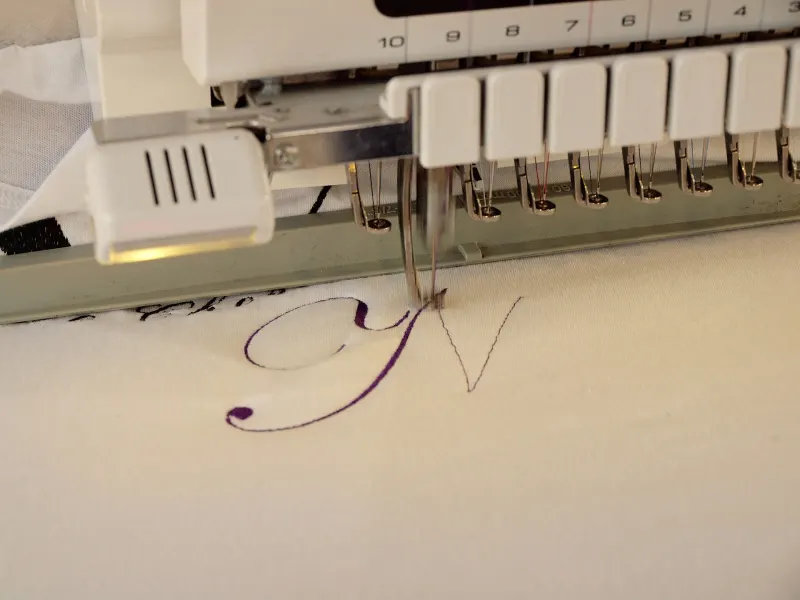
Sulky, which sells both, says polyester is the one to pick “if an item will be subjected to chlorine bleach or constant sun exposure.” It also says “both threads wash and wear equally well, even in hot water.” Read together, the practical rule is simple: choose polyester for bleach and sun, and either fiber for ordinary washing. Rayon’s case rests on appearance. That is one maker’s view, and we found no independent measurement to confirm or dispute it.
Other embroidery thread brands we did not rate
- Isacord (Amann): we could not read the maker’s page, so we have no maker-published specifications to cite.
- Floriani: same reason: no readable maker page.
- Robison-Anton: same reason: no readable maker page.
- Simthread and New brothread: their listings do not state the fiber and weight in a form we could check against a maker page.
Leaving a thread out is not a verdict on it. It means we could not support a comparison from the maker’s own words.
Buying tips
- Read your manual first. It names the bobbin weight and tells you what top thread the maker recommends.
- Start with a basic color set. Add colors as projects need them. Our beginner supplies checklist covers the rest of the shopping list.
- Match the needle. Madeira lists #65/9 or #75/11 for Polyneon #40. Check your manual for the sizes it allows.
- Treat “Not stated” as unknown. If a listing does not give fiber, weight, or spool length, find the maker’s page before you buy.
- Think about the item. A shirt you will wash often needs a different thread than a framed piece; see hooping a shirt. If you plan to sell your work, thread cost per item is part of the math in our small business guide.
What we could not assess
- How any of these threads runs through a machine: breakage, fuzz, and tension behavior. We do not conduct our own product trials.
- Whether Madeira thread works well in Brother machines. Brother’s manuals recommend Brother thread and say nothing for or against others.
- The top thread weight of Brother’s kit, which Brother does not publish on its page.
- Rayon spool sizes and any bleach claim, because the maker pages we read do not state them.
- Isacord, Floriani, and Robison-Anton, for the reasons above.
- Prices and stock, which change often. Check the maker’s page before buying.
Frequently Asked Questions
What embroidery thread weight should I use on top?
Brother’s manuals for the PE545, PE900, and PP1 do not name a top thread weight or fiber. They say to use embroidery thread intended for the machine, and the PP1 manual recommends Brother embroidery thread. The common 40 weight is what the Madeira and Sulky products in this guide are sold as.
What bobbin thread does a Brother embroidery machine use?
It depends on the model. The PE545, PE900, and Skitch PP1 manuals name 90 weight. The SE700 and SE2000 manuals name 60 weight.
Is polyester or rayon better for machine embroidery?
Neither is better for every job. Sulky, which sells both, recommends polyester for items exposed to chlorine bleach or constant sun, and says both wash and wear equally well otherwise. Rayon is chosen for its look.
What is the best embroidery thread for a Brother machine?
Brother’s manuals point to Brother embroidery thread: the PP1 manual says other embroidery threads may not yield optimum results, and other manuals say to use thread intended for the machine. That makes a Brother set the safest choice. If you try another brand, start with a small piece.
What needle goes with Madeira Polyneon #40?
Madeira lists #65/9 or #75/11. Check that your machine’s manual allows the size.
Why are some specs marked “Not stated”?
We only list what the maker’s own page says. If it does not give a weight, spool size, or care claim, we do not fill it in from other sources.
Recommended Starter Supplies: Quality machine embroidery requires proper backing stabilizers, lint-free bobbin thread, and polyester embroidery thread.
Top Polyester Thread Pick: Quality 40-weight trilobal polyester thread provides high tensile strength and rich sheen.
Sources
- Brother operation manuals: PE545 (888-P30), PE900 (888-K80), Skitch PP1 (888-R00), SE700 (888-P10), SE2000 (888-K10): top thread guidance and bobbin thread weight. Reviewed October 21, 2026.
- Madeira USA, Madeira Polyneon #40 product page: fiber, weight, spool length, bleach and OEKO-TEX claims, needle sizes, color counts. madeirausa.com/919-1522-madeira-polyneon-40.html. Accessed October 21, 2026.
- Madeira USA home page: Classic Rayon description. madeirausa.com. Accessed October 21, 2026.
- Brother USA, ETPBEST100 Best 100 Thread Kit product page: colors, fiber, spool length, color-fast claim. brother-usa.com/p/threads-spools-stands/ETPBEST100. Accessed October 21, 2026.
- Sulky, Rayon thread page: product name. sulky.com/thread/rayon/. Accessed October 21, 2026.
- Sulky blog, “Machine Embroidery Series: Rayon vs. Polyester”: fiber guidance. Sulky sells both fibers. blog.sulky.com/machine-embroidery-series-rayon-vs-polyester/. Accessed October 21, 2026.
About the author
The Embroidery Machine Scout team is the site's operator, who also writes as Jordan Hale, and a partner who works on the site with them. The team compiles manufacturer specifications, user manuals, warranty terms, and patterns in owner feedback, and shows where each detail comes from. The team does not run its own machine trials.